
PDF
Market Analysis Report
- Report ID: 1112
- Number of Report Pages: 122
- Format: PDF, Databook
- Published: 2026-02-25
- Industry: Consumer Goods And Services
Comparison of LTBI diagnostic methods in the U.S.
| Parameter | Tuberculin Skin Test (TST) | Interferon-Gamma Release Assay (IGRA) |
| Test Type | Intradermal skin test | Blood-based laboratory test |
| Patient Visits Required | Two (administration + reading) | One visit (blood draw) |
| Result Interpretation | Subjective measurement of induration | Objective laboratory measurement |
| Impact of BCG Vaccination | May cause false positives | No cross-reactivity |
| Sensitivity in Immunocompromised Patients | Reduced | Moderately improved vs TST |
| Turnaround Time | 48-72 hours | ~24 hours (lab dependent) |
| Infrastructure Needs | Minimal | CLIA-certified lab & instrumentation |
| Cost | Low | Higher than TST |
| Use Settings | Public health, clinics, occupational screening | Hospitals, reference labs, targeted screening |
| Key Advantage | Low cost & accessibility | Higher specificity & single-visit workflow |
LTBI Testing Decision Flow
However, limited awareness and the resulting underdiagnosis of latent tuberculosis infection (LTBI) represent a significant restraint on the U.S. LTBI detection market. Unlike active TB, latent TB is asymptomatic and does not cause immediate illness, which leads many individuals to underestimate the importance of screening. As a result, testing is often pursued only when required for employment, immigration, or specific medical conditions, rather than as a routine preventive measure. This low level of public awareness reduces voluntary testing rates and limits the overall demand for LTBI diagnostic services.
To learn more about this report, Download Free Sample Report
Download Free Sample ReportMarket Concentration & Characteristics
The degree of innovation in the U.S. latent tuberculosis infection (LTBI) detection market is moderate and has accelerated in response to the need for faster, more scalable, and highly accurate detection to support TB elimination goals. Molecular diagnostics, interferon-gamma release assays (IGRAs), and next-generation sequencing (NGS) are increasingly shaping the future of LTBI detection. These innovations support earlier identification, better surveillance, and more informed clinical decision-making. Mergers and acquisitions in the LTBI detection market have increasingly been focused on expanding laboratory networks, strengthening specialty testing capabilities, and improving access to high-quality screening services. Strategic transactions are enabling major laboratory service providers to broaden their reach, integrate advanced testing platforms, and enhance service delivery for TB screening programs across hospital systems, public health departments, and employer-based screening initiatives.
To learn more about this report,Download Free Sample Report
Regulatory oversight plays a critical role in shaping the adoption of LTBI diagnostics in the United States. FDA clearance requirements ensure high standards of clinical performance, reliability, and reproducibility for TB diagnostic assays and automated platforms. In parallel, guidance from the Centers for Disease Control and Prevention (CDC) and the U.S. Preventive Services Task Force (USPSTF) supports targeted LTBI screening among high-risk populations, influencing testing volumes and reimbursement coverage.
Diagnostic manufacturers continue to expand TB testing portfolios through enhanced IGRA assays, automation solutions, and workflow optimization tools designed to improve throughput and turnaround time. Product enhancements emphasize improved sensitivity, simplified laboratory workflows, and compatibility with automated liquid handling and laboratory information systems.
Download Free Sample ReportReport Coverage & Deliverables
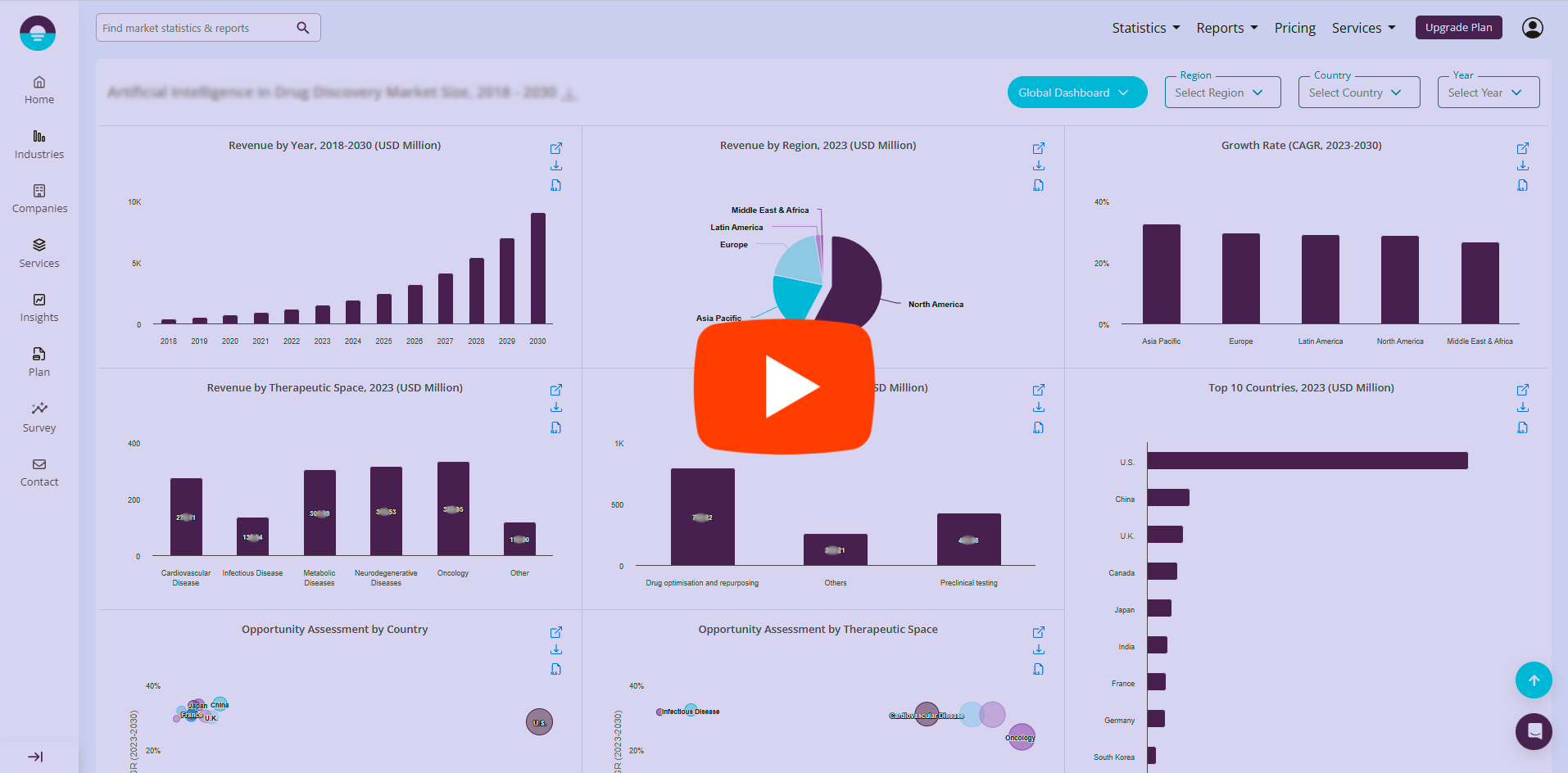
To learn more about this report,Download Free Sample Report
Download Free Sample ReportTest Insights
Tuberculin skin test (TST) dominated the market and accounted for the largest revenue share of 67.48% in 2025. The dominance of the segment is attributed to its widespread use as a reliable and cost-effective method for screening latent tuberculosis infection (LTBI). The test involves intradermal injection of tuberculin purified protein derivative (PPD) into the inner surface of the skin using the Mantoux method, after which the injection site is evaluated 48-72 hours later for induration. In individuals with no known risk factors, an induration of 15 mm or greater is typically considered positive. The TST remains highly penetrated across public health programs, occupational screening, and routine clinical practice due to its affordability, established clinical acceptance, and ease of deployment. Interferon Gamma Released Assay (IGRA) is projected to experience the fastest CAGR of 6.39% during the forecast period. This growth is driven by the increasing adoption of blood-based testing for latent tuberculosis infection (LTBI), supported by its clinical and operational advantages over the tuberculin skin test (TST). IGRAs detect infection by measuring interferon-gamma released by sensitized T cells in response to TB-specific antigens, enabling objective, laboratory-based interpretation. In the U.S., these tests are favored because they require only a single patient visit for blood collection, improving compliance in outpatient care, occupational health screening, and public health contact investigations where follow-up visits can be challenging.Application Insights
People living with HIV (PLHIV) segment accounted for the largest market share of 42.85% in 2025, attributed to their substantially elevated risk of progression from latent infection to active TB disease. HIV infection is recognized by the CDC as one of the strongest risk factors for TB activation, and U.S. clinical guidelines recommend routine TB screening as part of comprehensive HIV care. Even in low-incidence settings, TB remains an important opportunistic infection among PLHIV, particularly in individuals with additional risk factors such as foreign birth or immunosuppressive therapy. Both the tuberculin skin test (TST) and interferon-gamma release assays (IGRAs) are used for LTBI screening; however, immune suppression may reduce test sensitivity. For PLHIV, a TST induration of ≥5 mm is considered positive. IGRAs are often preferred in HIV care settings due to higher specificity and operational convenience. Ongoing risk-based screening and integration of LTBI management into HIV programs continue to sustain testing demand in this high-risk population. Household contacts with pulmonary TB is likely to grow at the fastest CAGR of 6.19% over the forecast period. In the U.S., household contacts of individuals with infectious pulmonary tuberculosis represent one of the highest-priority populations for TB contact investigations and latent tuberculosis infection (LTBI) screening. Close and prolonged exposure significantly increases the risk of TB transmission, and U.S. public health authorities consistently prioritize this group for early identification and preventive treatment. According to the U.S. Centers for Disease Control and Prevention (CDC), targeted testing of close contacts is a cornerstone of TB control efforts, as untreated LTBI in this population carries a measurable risk of progression to active disease, particularly within the first two years following exposure.End Use Insights
Diagnostic laboratories led the LTBI detection market, accounting for 54.55% of the revenue share in 2025, owing to efforts to improve patient outcomes by providing diagnostic facilities at the retail level. Moreover, the ability of laboratories to handle a large volume of tests at an expedited rate is expected to further fuel the segment over the forecast period. Furthermore, diagnostic laboratories also deal with samples received from clinics and hospitals. Diagnostic laboratories are providing newer blood tests for the screening or detection of LTBIs. For instance, independent laboratories such as Dynacare and Life Labs provide tests, such as QuantiFERON-TB blood tests and T-SPOT.TB tests, for the detection of LTBI, are available at comparatively lower prices. In addition, in March 2023, the U.S. Food and Drug Administration approved two additional cell isolation instruments from PerkinElmer’s Oxford Immunotec for use with the T-Cell Select™ reagent kit, aiding in the diagnosis of tuberculosis (TB) in vitro. This approval enhances the automation of TB detection, reducing time and labor for laboratories and providing faster and more reliable results for patients.
To learn more about this report,Download Free Sample Report
The hospitals/clinics segment is expected to grow at a lucrative rate over the forecast period. Individuals with medical conditions, such as HIV/AIDS, chronic renal failure, and other diseases that weaken the immune system, are at increased risk of LTBI and its development into an active TB case. The increasing prevalence of diseases that affect the immune system is likely to boost the testing rate for LTBIs in hospitals and clinics. The penetration of TST is higher in hospitals and clinics, as it requires standardization of procedures and trained professionals to conduct tests & read the skin test reaction. Moreover, TST does not require specific equipment and reagent kits to detect latent tuberculosis infection. In addition, LTBI detection market players, such as bioMérieux, are working to equip hospital laboratories with the newer blood test for the detection of LTBI.
Download Free Sample ReportKey U.S. Latent Tuberculosis Infection Detection Company Insights
The competitive scenario in the LTBI detection market is high, with key players such as QIAGEN, Euroimmun US, bioMérieux, and Oxford Immunotec holding significant positions. Prominent market participants are focusing on increasing their customer base using acquisition strategies.Key U.S. Latent Tuberculosis Infection Detection Companies:
- QIAGEN
- Euroimmun US
- bioMérieux
- Oxford Immunotec
- SD Biosensor, INC.
- Quest Diagnostics
- LabCorp
- ARUP Laboratories
- Mayo Clinic Laboratories
- BioReference Laboratories
- Par Pharmaceutical, Inc.
Recent Developments
- In April 2025, Revvity announced the U.S. FDA approval of the Auto-Pure 2400 liquid handling platform with the T-SPOT.TB test. The product was initially introduced outside the U.S. in 2024. This integrated solution enables laboratories to enhance productivity while maintaining high clinical performance in latent tuberculosis (TB) detection. The approval represents an advancement in TB control, offering a faster, high-throughput testing solution that delivers accurate results to support timely treatment and disease containment in the U.S.
- In March 2025, BioReference/OPKO Health entered into an agreement for Labcorp to acquire selected assets of BioReference’s clinical testing businesses, expanding clinical laboratory access and service footprint. As part of the agreement, Labcorp will take over BioReference Health’s U.S.-based oncology and oncology-related laboratory testing operations, along with associated customer relationships and select operational assets.
- In January 2025, SD Biosensor’s latent TB diagnostic product STANDARD E TB-Feron ELISA was officially included in the WHO’s list of recommended TB diagnostics following a Pathway B evaluation, affirming performance comparable to existing WHO-recommended tests.
U.S. Latent Tuberculosis Infection Detection Market Report Scope
| Report Attribute | Details |
| Market size value in 2026 | USD 457.51 million |
| Revenue forecast in 2033 | USD 651.11 million |
| Growth rate | CAGR of 5.17% from 2026 to 2033 |
| Actual data | 2021 - 2025 |
| Forecast period | 2026 - 2033 |
| Quantitative units | Revenue in USD million/billion, volume (number of tests) in thousands, and CAGR from 2026 to 2033 |
| Report coverage | Revenue & volume forecast, company ranking, competitive landscape, growth factors, and trends |
| Segments covered | Test, application, end use |
| Country scope | U.S. |
| Key companies profiled | QIAGEN; Euroimmun US; bioMérieux; Oxford Immunotec; SD Biosensor, INC.; Quest Diagnostics; LabCorp; ARUP Laboratories; Mayo Clinic Laboratories; BioReference Laboratories; Par Pharmaceutical, Inc. |
| Customization scope | Free report customization (equivalent up to 8 analyst working days) with purchase. Addition or alteration to country, regional & segment scope. |
| Pricing and purchase options | Avail customized purchase options to meet your exact research needs. Explore purchase options |
U.S. Latent Tuberculosis Infection Detection Market Report Segmentation
This report forecasts revenue growth at country levels and provides an analysis of the latest industry trends and opportunities in each of the sub-segments from 2021 to 2033. For this study, Grand View Research has segmented the U.S. latent tuberculosis infection detection market report based on test, application, and end use:- Test Outlook (Revenue, USD Million, 2021 - 2033) (Volume, Number of Tests in Thousands)
- Interferon Gamma Released Assay (IGRA)
- QFT
- T.SPOT
- Tuberculin Skin Test (TST)
- Interferon Gamma Released Assay (IGRA)
- Application Outlook (Revenue, USD Million, 2021 - 2033) (Volume, Number of Tests in Thousands)
- Household Contacts With Pulmonary TB
- PLHIV
- Others
- End Use Outlook (Revenue, USD Million, 2021 - 2033) (Volume, Number of Tests in Thousands)
- Diagnostic Laboratories
- Hospitals/Clinics
- Academic & Research Institutions
Table of Contents
Chapter 1. Methodology and Scope
1.1. Market Segmentation and Scope
1.2. Segment Definitions
1.2.1. Test
1.2.2. Application
1.2.3. End Use
1.2.4. Estimates and forecasts timeline
1.3. Objectives
1.3.1. Objective-1
1.3.2. Objective-2
1.3.3. Objective-3
1.4. Research Methodology
1.5. Information Procurement
1.5.1. Purchased database
1.5.2. GVR’s internal database
1.5.3. Secondary sources
1.5.4. Primary research
1.6. Information or Data Analysis
1.6.1. Data analysis models
1.7. Market Formulation & Validation
1.8. Model Details
1.8.1. Commodity flow analysis
1.8.1.1. Approach 1: Commodity flow approach
1.8.1.2. Approach 2: Country-wise market estimation using bottom-up approach
1.9. List of Secondary Sources
1.10. List of Primary Sources
1.11. Objectives
Chapter 2. Executive Summary
2.1. Market Outlook
2.2. Test Snapshot
2.3. Application and End-use Snapshot
2.4. Competitive Insights
Chapter 3. U.S. Latent Tuberculosis Infection Detection Market Variables, Trends & Scope
3.1. Market Lineage Outlook
3.1.1. Parent Market Outlook (Latent Tuberculosis Infection Detection Market)
3.1.2. Related/ancillary market outlook (Tuberculosis Diagnostics Market)
3.2. Market Dynamics
3.2.1. Market Driver Analysis
3.2.1.1. Increase in risk of developing active Tuberculosis Infection from LTBI
3.2.1.2. Increasing Funding Programs to Promote TB Diagnostics
3.2.1.3. Technological Advancements in Diagnostics Methods
3.2.2. Market Restraint Analysis
3.2.2.1. Limited Awareness and Underdiagnosis of Latent TB
3.2.3. Market Opportunity Analysis
3.2.3.1. Growing Focus on TB Elimination and Preventive Care
3.2.3.2. Expansion of Community-Based and Targeted Screening Programs
3.2.4. Market Challenge Analysis
3.2.4.1. Low Disease Visibility and Competing Public Health Priorities
3.3. U.S. Latent Tuberculosis Infection Detection Market Analysis Tools
3.3.1. Industry Analysis - Porter’s
3.3.1.1. Bargaining power of suppliers
3.3.1.2. Bargaining power of buyers
3.3.1.3. Threat of substitutes
3.3.1.4. Threat of new entrants
3.3.1.5. Competitive rivalry
3.3.2. PESTEL Analysis
3.3.2.1. Political landscape
3.3.2.2. Economic landscape
3.3.2.3. Social landscape
3.3.2.4. Technological landscape
3.3.2.5. Environmental landscape
3.3.2.6. Legal landscape
3.4. Regulatory Framework
3.5. Reimbursement Scenario
3.6. Payment/ Reimbursement for Immigration Testing
3.7. CLIA Labs in the U.S.
3.7.1. List of all the CLIA Labs in the U.S
3.7.2. List of CLIA and NYS Certified Labs that Perform QFT (CPT 86480), T-SPOT.TB (86481), TST (86580), and their Volumes
3.7.3. List of Physicians and Volumes Ordered of the Tests Split out by NPI, Geography, and Practice
Chapter 4. U.S. Latent Tuberculosis Infection Detection Market: Test Estimates & Trend Analysis
4.1. Segment Dashboard
4.2. U.S. Latent Tuberculosis Infection Detection Market: Test Movement Analysis
4.3. U.S. Latent Tuberculosis Infection Detection Market by Test Outlook (USD Million)
4.4. Market Size & Forecasts and Trend Analyses, 2021 to 2033, for the following
4.5. Interferon Gamma Released Assay (IGRA)
4.5.1. Interferon Gamma Released Assay (IGRA) Market Revenue Estimates and Forecasts, 2021 - 2033 (USD Million)
4.5.2. Interferon Gamma Released Assay (IGRA) Market Estimates and Forecasts, 2021 - 2033 (Number of Tests, in Thousands)
4.5.3. QFT
4.5.3.1. QFT Market Revenue Estimates and Forecasts, 2021 - 2033 (USD Million)
4.5.3.2. QFT Market Revenue Estimates and Forecasts, 2021 - 2033 (Number of Tests, in Thousands)
4.5.4. T. SPOT
4.5.4.1. T. SPOT Market Revenue Estimates and Forecasts, 2021 - 2033 (USD Million)
4.5.4.2. T. SPOT Market Revenue Estimates and Forecasts, 2021 - 2033 (Number of Tests, in Thousands)
4.6. Tuberculin Skin Test (TST)
4.6.1. Tuberculin Skin Test (TST) Market Revenue Estimates and Forecasts, 2021 - 2033 (USD Million)
4.6.2. Tuberculin Skin Test (TST) Market Revenue Estimates and Forecasts, 2021 - 2033 (Number of Tests, in Thousands)
Chapter 5. U.S. Latent Tuberculosis Infection Detection Market: Application Estimates & Trend Analysis
5.1. Segment Dashboard
5.2. U.S. Latent Tuberculosis Infection Detection Market: Application Movement Analysis
5.3. U.S. Latent Tuberculosis Infection Detection Market by Application Outlook (USD Million)
5.4. Market Size & Forecasts and Trend Analyses, 2021 to 2033, for the following
5.5. Household Contacts With Pulmonary TB
5.5.1. Household Contacts With Pulmonary TB Market Revenue Estimates and Forecasts, 2021 - 2033 (USD Million)
5.5.2. Household Contacts With Pulmonary TB Market Revenue Estimates and Forecasts, 2021 - 2033 (Number of Tests, in Thousands)
5.6. PLHIV
5.6.1. PLHIV Market Revenue Estimates and Forecasts, 2021 - 2033 (USD Million)
5.6.2. PLHIV Market Revenue Estimates and Forecasts, 2021 - 2033 (Number of Tests, in Thousands)
5.7. Others
5.7.1. Others Market Revenue Estimates and Forecasts, 2021 - 2033 (USD Million)
5.7.2. Others Market Revenue Estimates and Forecasts, 2021 - 2033 (Number of Tests, in Thousands)
Chapter 6. U.S. Latent Tuberculosis Infection Detection Market: End Use Estimates & Trend Analysis
6.1. Segment Dashboard
6.2. U.S. Latent Tuberculosis Infection Detection Market: End Use Movement Analysis
6.3. U.S. Latent Tuberculosis Infection Detection Market by End Use Outlook (USD Million)
6.4. Market Size & Forecasts and Trend Analyses, 2021 to 2033, for the following
6.5. Diagnostic Laboratories
6.5.1. Diagnostic Laboratories Market Revenue Estimates and Forecasts, 2021 - 2033 (USD Million)
6.5.2. Diagnostic Laboratories Market Revenue Estimates and Forecasts, 2021 - 2033 (Number of Tests, in Thousands)
6.6. Hospitals/Clinics
6.6.1. Hospitals/Clinics Market Revenue Estimates and Forecasts, 2021 - 2033 (USD Million)
6.6.2. Hospitals/Clinics Market Revenue Estimates and Forecasts, 2021 - 2033 (Number of Tests, in Thousands)
6.7. Academic & Research Institutions
6.7.1. Academic & Research Institutions Market Revenue Estimates and Forecasts, 2021 - 2033 (USD Million)
6.7.2. Academic & Research Institutions Market Revenue Estimates and Forecasts, 2021 - 2033 (Number of Tests, in Thousands)
Chapter 7. Competitive Landscape
7.1. Market Participant Categorization
7.2. Recent Developments & Impact Analysis by Key Market Participants
7.3. Company Market Share Analysis, 2025
7.4. Key Company Profiles
7.4.1. QIAGEN
7.4.1.1. Company overview
7.4.1.2. Financial performance
7.4.1.3. Product benchmarking
7.4.1.4. Strategic initiatives
7.4.2. Euroimmun US
7.4.2.1. Company overview
7.4.2.2. Financial performance
7.4.2.3. Product benchmarking
7.4.2.4. Strategic initiatives
7.4.3. bioMérieux
7.4.3.1. Company overview
7.4.3.2. Financial performance
7.4.3.3. Product benchmarking
7.4.3.4. Strategic initiatives
7.4.4. Oxford Immunotec
7.4.4.1. Company overview
7.4.4.2. Financial performance
7.4.4.3. Product benchmarking
7.4.4.4. Strategic initiatives
7.4.5. SD Biosensor, INC.
7.4.5.1. Company overview
7.4.5.2. Financial performance
7.4.5.3. Product benchmarking
7.4.5.4. Strategic initiatives
7.4.6. Quest Diagnostics
7.4.6.1. Company overview
7.4.6.2. Financial performance
7.4.6.3. Product benchmarking
7.4.6.4. Strategic initiatives
7.4.7. LabCorp
7.4.7.1. Company overview
7.4.7.2. Financial performance
7.4.7.3. Product benchmarking
7.4.7.4. Strategic initiatives
7.4.8. ARUP Laboratories
7.4.8.1. Company overview
7.4.8.2. Financial performance
7.4.8.3. Product benchmarking
7.4.8.4. Strategic initiatives
7.4.9. Mayo Clinic Laboratories
7.4.9.1. Company overview
7.4.9.2. Financial performance
7.4.9.3. Product benchmarking
7.4.9.4. Strategic initiatives
7.4.10. BioReference Laboratories
7.4.10.1. Company overview
7.4.10.2. Financial performance
7.4.10.3. Product benchmarking
7.4.10.4. Strategic initiatives
7.4.11. Par Pharmaceutical, Inc.
7.4.11.1. Company overview
7.4.11.2. Financial performance
7.4.11.3. Product benchmarking
7.4.11.4. Strategic initiatives
List of Tables
Table 1 List of secondary sources
Table 2 List of abbreviations
Table 3 List of all the CLIA labs in the U.S
Table 4 List of CLIA and NYS certified labs that perform QFT (CPT 86480), T-SPOT.TB (86481), TST (86580), and their volumes
Table 5 List of physicians and volumes ordered of the tests, split out by NPI, geography, and practice
Table 6 U.S. latent tuberculosis infection detection market, by test, 2021 - 2033 (USD Million)
Table 7 U.S. latent tuberculosis infection detection market, by application, 2021 - 2033 (USD Million)
Table 8 U.S. latent tuberculosis infection detection market, by end use, 2021 - 2033 (USD Million)
List of Figures
Fig. 1 U.S. latent tuberculosis infection detection market segmentation
Fig. 2 Market research process
Fig. 3 Data triangulation techniques
Fig. 4 Primary research pattern
Fig. 5 Market research approaches
Fig. 6 Value chain-based sizing & forecasting
Fig. 7 QFD modelling for market share assessment
Fig. 8 Market formulation & validation
Fig. 9 U.S. latent tuberculosis infection detection market snapshot
Fig. 10 Test snapshot
Fig. 11 Application and end-use snapshot
Fig. 12 Competitive landscape snapshot
Fig. 13 Parent market outlook
Fig. 14 Related/ancillary market outlook
Fig. 15 Market dynamics
Fig. 16 Market driver analysis (current & future impact)
Fig. 17 Market restraint analysis (current & future impact)
Fig. 18 Porter’s five forces analysis
Fig. 19 SWOT analysis, by factor (political & legal, economic and technological)
Fig. 20 U.S. latent tuberculosis infection detection market, test outlook key takeaways
Fig. 21 U.S. latent tuberculosis infection detection market, test movement analysis
Fig. 22 IGRA market revenue estimates and forecasts, 2021 - 2033 (USD Million)
Fig. 23 IGRA market revenue estimates and forecasts, 2021 - 2033 (Number of Tests in Thousands)
Fig. 24 Tuberculin Skin Test (TST) market revenue estimates and forecasts, 2021 - 2033 (USD Million)
Fig. 25 Tuberculin Skin Test (TST) market revenue estimates and forecasts, 2021 - 2033 (Number of Tests in Thousands)
Fig. 26 QFT market revenue estimates and forecasts, 2021 - 2033 (USD Million)
Fig. 27 QFT market revenue estimates and forecasts, 2021 - 2033 (Number of Tests in Thousands)
Fig. 28 T.SPOT market revenue estimates and forecasts, 2021 - 2033 (USD Million)
Fig. 29 T.SPOT market revenue estimates and forecasts, 2021 - 2033 (Number of Tests in Thousands)
Fig. 30 U.S. latent tuberculosis infection detection market, application outlook key takeaways
Fig. 31 U.S. latent tuberculosis infection detection market, application movement analysis
Fig. 32 Household Contacts with Pulmonary TB market revenue estimates and forecasts, 2021 - 2033 (USD Million)
Fig. 33 Household Contacts with Pulmonary TB market revenue estimates and forecasts, 2021 - 2033 (Number of Tests in Thousands)
Fig. 34 PLHIV market revenue estimates and forecasts, 2021 - 2033 (USD Million)
Fig. 35 PLHIV market revenue estimates and forecasts, 2021 - 2033 (Number of Tests in Thousands)
Fig. 36 Others market revenue estimates and forecasts, 2021 - 2033 (USD Million)
Fig. 37 Others market revenue estimates and forecasts, 2021 - 2033 (Number of Tests in Thousands)
Fig. 38 U.S. latent tuberculosis infection detection market, end use outlook key takeaways
Fig. 39 U.S. latent tuberculosis infection detection market, end use movement analysis
Fig. 40 Diagnostic Laboratories market revenue estimates and forecasts, 2021 - 2033 (USD Million)
Fig. 41 Diagnostic Laboratories market revenue estimates and forecasts, 2021 - 2033 (Number of Tests in Thousands)
Fig. 42 Hospitals/Clinics market revenue estimates and forecasts, 2021 - 2033 (USD Million)
Fig. 43 Hospitals/Clinics market revenue estimates and forecasts, 2021 - 2033 (Number of Tests in Thousands)
Fig. 44 Academic & Research Institutions market revenue estimates and forecasts, 2021 - 2033 (USD Million)
Fig. 45 Academic & Research Institutions market revenue estimates and forecasts, 2021 - 2033 (Number of Tests in Thousands)
Fig. 46 Key company categorization
Fig. 47 Strategy mapping
Segmentation
- U.S. Latent Tuberculosis Infection Detection Test Outlook (Revenue, USD Million, 2021 - 2033) (Volume, Number of Tests in Thousands)
- Interferon Gamma Released Assay (IGRA)
- QFT
- T.SPOT
- Tuberculin Skin Test (TST)
- Interferon Gamma Released Assay (IGRA)
- U.S. Latent Tuberculosis Infection Detection Application Outlook (Revenue, USD Million, 2021 - 2033) (Volume, Number of Tests in Thousands)
- Household Contacts with Pulmonary TB
- PLHIV
- Others
- U.S. Latent Tuberculosis Infection Detection End-use Outlook (Revenue, USD Million, 2021 - 2033) (Volume, Number of Tests in Thousands)
- Diagnostic Laboratories
- Hospitals/Clinics
- Academic & Research Institutions
- Industry overview
- Industry trends
- Market drivers and restraints
- Market size
- Growth prospects
- Porter’s analysis
- PESTEL analysis
- Key market opportunities prioritized
- Competitive landscape
- Company overview
- Financial performance
- Product benchmarking
- Latest strategic developments
- Market size, estimates, and forecast from 2021 to 2033
- Market estimates and forecast for product segments up to 2033
- Country market size and forecast for product segments up to 2033
- Market estimates and forecast for application segments up to 2033
- Country market size and forecast for application segments up to 2033
- Company financial performance
Methodology
Our Research Methodology
A glimpse at our time-tested and proven information gathering, analysis, formulation, and validation process.
Throughout each step of the research and reporting process, we institute industry best practices and international standards of data collection, analysis, and reporting, to provide comprehensive, validated insights to our clients. Our process is rigorous and iterative, and specific to the industry and questions we're trying to answer. We continue to validate our work as we uncover new data points and derive new insights, and we work with clients to clearly define research goals and agree upon the methodology we'll apply to each project.

Information Procurement
- We buy access to paid databases such as Hoover's and Factiva for company financials, industry information, white papers, industry journals, SME journals, and more.
- We tap into Grand View's proprietary database of data points and insights from active and archived monitoring and reporting.
- We conduct primary research with industry experts through questionnaires and one-on- one phone interviews.
- We pull from reliable secondary sources such as white papers and government statistics, published by organizations like WHO, NGOs, World Bank etc., Key Opinion Leaders (KoL) publications, company filings, investor documents, and more.
- We purchase and review investor analyst reports, broker reports, academic commentary, government quotes, and wealth management publications for insightful third-party perspectives.
Information Analysis
Market Research Efforts:
- Bottom-up Approach for estimating and forecasting demand size and opportunity
- Top-down Approach for new product forecasting and penetration
- Combined Approach of both Bottom-up and Top-down for full coverage analysis
Value-Chain-Based Sizing & Forecasting
- Supply-Side Estimates for understanding potential revenue through competitive benchmarking, forecasting, and penetration modeling
- Demand-Side Estimates for identifying parent and ancillary markets, segment modeling, and heuristic forecasting
- QualitativeFunctional Deployment (QFD) Modelling for market share assessment
Market Research Approaches:
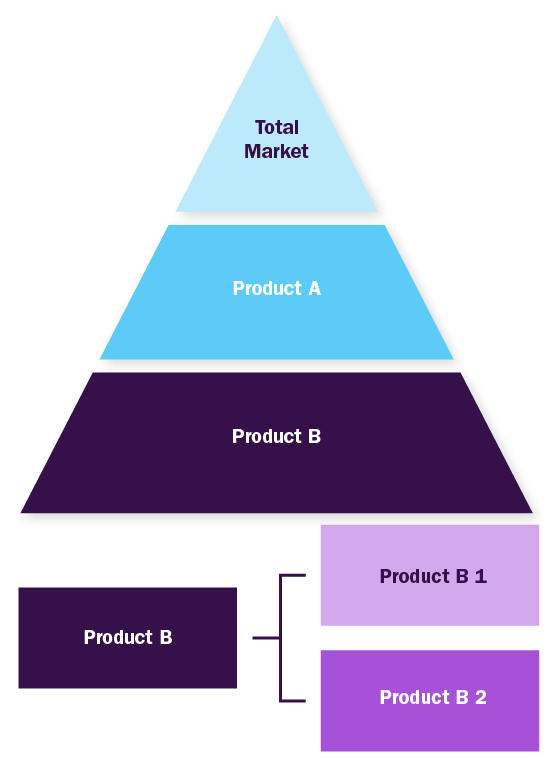
Bottom-up Approach
- Demand estimation of each product across countries/regions summed to from the total market
- Variable analysis for demand forecast
- Demand estimation via analyzing paid database, company financials either via annual reports or paid database
- Primary interviews for data revalidation and insight collection
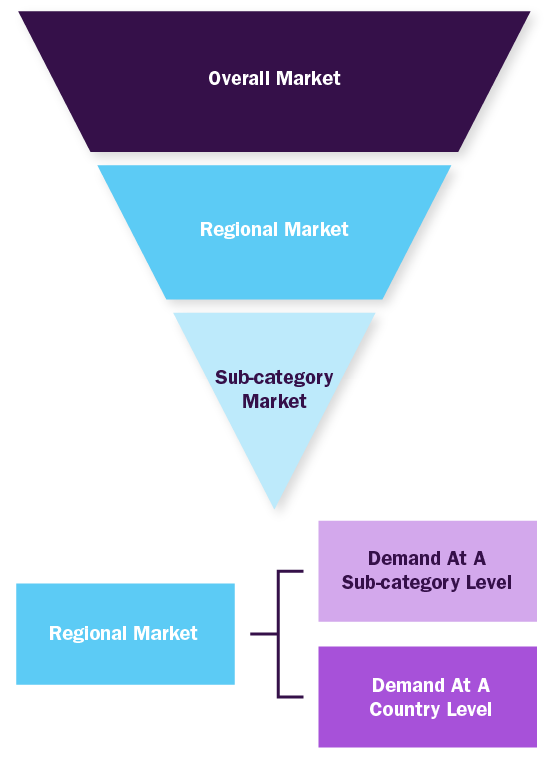
Top-down Approach
- Used extensively for new product forecasting or analyzing penetration level
- Tool used invoice product flow and penetration models
- Use of regression multi-variant analysis for forecasting
- Involves extensive use of paid and public databases
- Primary interviews and vendor-based primary research for variable impact analysis
Combined/Mixed Approach
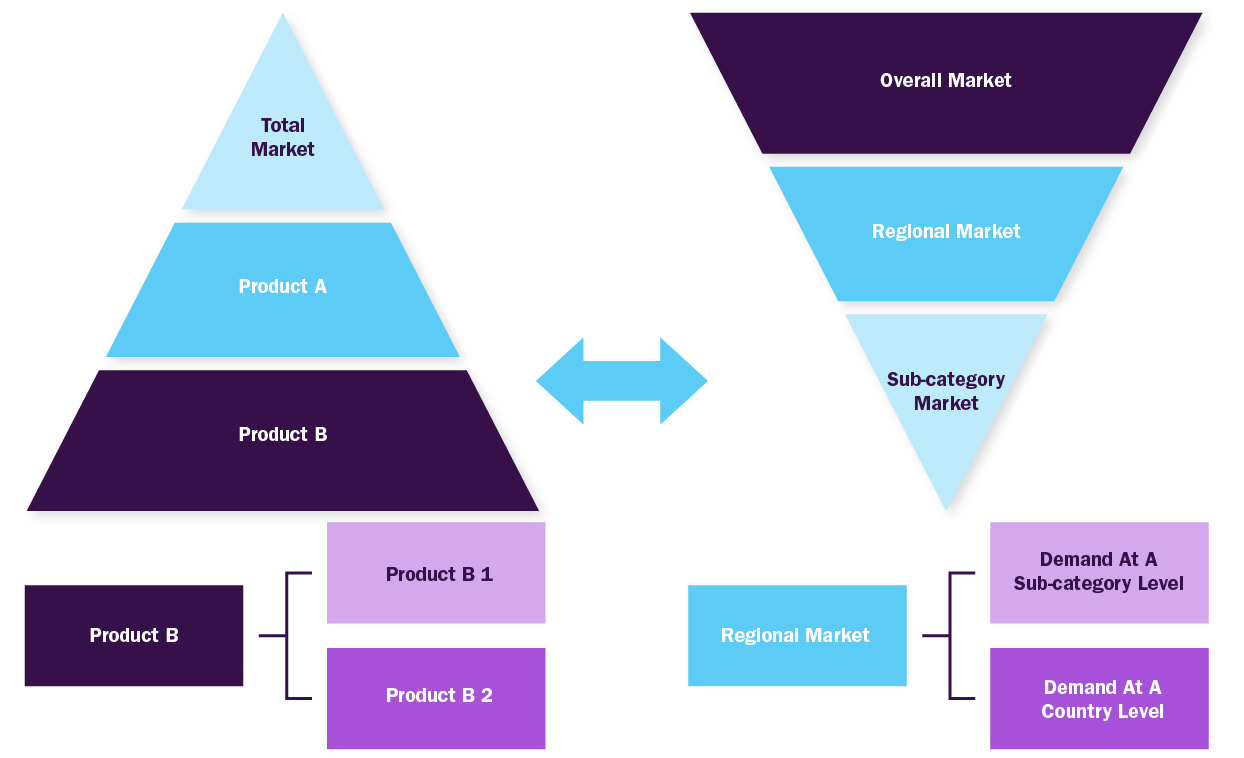
Derived via commodity flow and demand / consumption models
Value Chain Based Sizing & Forecasting
Supply Side Estimates
- Company revenue estimation via referring to annual reports, investor presentations and Hoover's
- Segment revenue determination via variable analysis and penetration modelling
- Competitive benchmarketing to identify market leaders and their collective revenue shares
- Forecasting via analyzing commercialization rates, pipeline, market initiatives, distribution networks etc.
Demand Side Estimates
- Identifying parent markets and ancillary markets
- Segment penetration analysis to obtain pertinent revenue/volume
- Heuristic forecasting with the help of subject matter experts
- Forecasting via variable analysis
Market Formulation And Validation
Market Formulation:
- This step involves finalization of market numbers. This step on an internal level is designed to manage outputs from the Data Analysis step.
Data Normalization
- The final market estimates and forecasts are then aligned and sent to industry experts and in-panel quality control managers for validation.
- This step also entails the finalization of the report scope and data representation pattern.
Validation
- The process entails multiple levels of validation. All these steps run in parallel and the study is forwarded for publishing only if all three levels render validated results.
Multi-level Data Validation

Delivery
We know that our clients are looking for more than data points on a page they're relying on a trusted adviser and partner to hunt for insights and collaborate with them to diagnose and respond to market forces.Delivery Details
Each of our analysts works with clients to scope questions appropriately and to clarify report findings. Moreover, each client is assigned a project point person to ensure a smooth process throughout the course of the project. We believe this open flow of communication is critical to provide meaningful and accurate consultation.Market Inputs
GVR team analyzes the overall market scenario across regions to understand the country-/ regional level dynamics. To build market models, we analyze several factors, including:- Macro & micro economic factors
- Political scenarios and government regulations
- Industrial policies
- Technology challenges
- CAPEX projects & investment patterns
- Sales channel profitability
Addressing Client Inputs
GVR team will work around the client's brief to address particular pain points considering inputs from stage-1. This phase will address specifics of the objective custom-made for the client and deliver value through fact-based market requirements. Brief could be focused on market entry strategy, new product launches, M&A partner identification, JV or investments, location feasibility, financial model development, technology roadmap, customer satisfaction surveys etcSolution Development
GVR team will build a strategy roadmap with actionable insights and strategic recommendations for the client, based on the outcome of first two stages, considering various parameters aligned to the objective shared by the client.Frequently Asked Questions About This Report
The global U.S. latent tuberculosis infection detection market size was estimated at USD 427.61 million in 2025 and is expected to reach USD 457.51 million in 2026.
The global U.S. latent tuberculosis infection detection market is expected to grow at a compound annual growth rate of 5.17% from 2026 to 2033 to reach USD 651.11 million by 2033.
People living with HIV (PLHIV) segment accounted for largest market share of 42.85% in 2025. This is attributed to their substantially elevated risk of progression from latent infection to active TB disease.
Some key players operating in the U.S. latent tuberculosis infection detection market include QIAGEN, Euroimmun US, bioMérieux, Oxford Immunotec, SD Biosensor, INC., Quest Diagnostics , LabCorp, ARUP Laboratories, Mayo Clinic Laboratories, BioReference Laboratories, Par Pharmaceutical, Inc.
Key factors that are driving the market growth include an increasing risk of developing active tuberculosis infection from LTBI, growing funding programs to promote TB diagnosis aided with technological advancements in diagnostic methods.